
NOTE: This post is based on extracts from my 2024 book “Park Further Away: … and 49 other NEAT ways to energize your life”. Check out my Amazon Author Page for more details on this and other publications.
So, before we get into the whole NEAT thing …
Most people understand that regular exercise is “good for them”, and there is a LOT of research out there to confirm this.
Actually doing the exercise though – that can be a challenge
…. and many of us have probably faced that challenge.
It begins, typically, something like this …
We start off with “A PLAN”
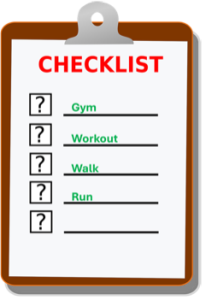
A PLAN to go to the gym, A PLAN to work out, A PLAN to go for a walk, A PLAN to go for a run
But all too often THE PLAN gets sidelined or “de-prioritized”, and we end up not doing the exercise for a whole host of “reasons” – which uncharitable people often call “Excuses”
However ….
What if you could just forgo all that “exercise” – all that working out and going to the gym – all that sweat and discomfort – all that pounding the streets.
What if you could replace all that exercise with easier peasier stuff, most of which you probably already do on a daily basis.
And ….
Instead of calling it – or thinking about it as – “Exercise”(which is an intimidating word for many people) – let’s call it “Physical Activity”
I call it just ”Moving about a bit”.
And any kind of “Moving about a bit” – almost always involves …
WALKING
Something that needs no gym, no special workout clothes, no personal trainer.
Just a word and a concept that is user friendly – and with little potential for intimidation
Just …..mostly …
WALKING
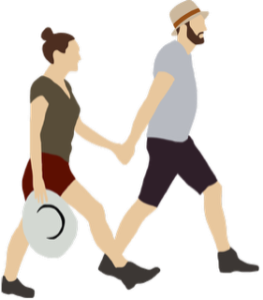
Now, I’m not talking here about what you might call “programmatic” walking – the “planned in advance” kind of walking, the “have to get to 10,000 steps” kind of walking, the “need a smart watch to keep count” kind of walking.
NO
I’m talking here about walking as a kind of “unacknowledged” physical activity. The kind of walking that is rarely thought of but is essential to, and necessary for completing other tasks—other chores—other challenges. The kind of “moving about a bit” walking. The kind of walking that allows you to finish up stuff.
For example…
You are not walking up and down the lawn pushing a mower
You are mowing the lawn.
You are not walking around the store putting food items into your cart.
You are grocery shopping.
You are not walking around the house pushing the vacuum cleaner over the floor
You are vacuuming.
You are not…
See what I mean here?
The walking bit is hardly ever mentioned but it is always there – essential and unavoidable.
In the 3 examples above, walking is not the goal—it’s just a necessary part of what you have to do to achieve the goal—so you can do what you have to do.
This kind of “moving about a bit” can happen countless times throughout the day. It turns out that these small, frequently performed “movings” can produce meaningful health and fitness benefits.
Sound too good to be true???
Read on …
Background
In studies that investigate the connection between “Exercise”, “Physical Activity” and health, researchers very often use specialized definitions and specified categories (that some would call “jargon”).
“Physical Activity” and “Exercise” are two examples of this.
Because any kind of movement expends energy, and because expending energy produces heat, researchers have divided all movement into two broad categories based on heat production.
The word they use is “thermogenesis” (from the Greek words “thermo-“ meaning heat, and “-genesis” meaning creation).
The categories are …
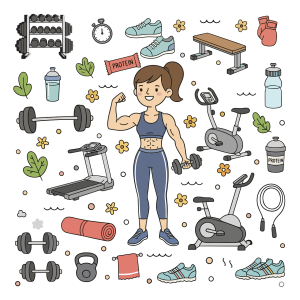
- “Exercise Activity Thermogenesis” – or E.A.T.
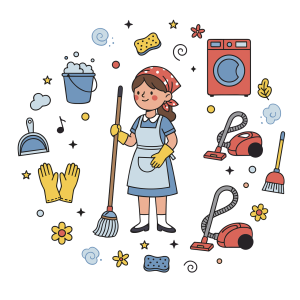
- “Non-Exercise Activity Thermogenesis” – or N.E.A.T.
EAT
This is your basic fitness, working out, sports-related type of physical activity.
Stuff that is “…planned, structured, and repetitive”).
It’s what most people think of as “Exercise”
[NOTE: It has nothing to do with nutrition!]
 NEAT
NEAT
This is everything else:
Regular, everyday stuff like chores, gardening, shopping, laundry, sweeping, vacuuming, lifting carrying… whatever
It’s what most people DO NOT think of as exercise.
[NOTE: It has nothing to do with keeping things tidy!]
THE IMPORTANT TAKEAWAY here is that of these two categories, research has shown that NEAT (the “just moving about a bit” kind of movement) is the most effective from an energy expenditure/calorie expenditure perspective.
Because of this, NEAT likely has the greatest potential impact on health.
Here’s why …
The energy you expend during a hard work out at the gym – or a long run – or playing sports (i.e. EAT) will likely be MUCH LESS than the energy you expend for the remaining 12-15+ hours of the day when you are awake (i.e. NEAT)
Ok, if you are a marathon runner in training, maybe this does not apply. But for the overwhelming majority of people – it’s not even close.
What this means is that looking for opportunities to just move about a bit (and just a bit more) is far more important for your health and wellbeing than you may have realized, even if you already exercise or work out on a regular basis.
N.E.A.T. is definitely the way to go for maximizing daily energy/calorie expenditure

… And the World Health Organization (WHO) agrees!
In 2020, the Director General of WHO issued a statement saying, in part, that
“Being physically active is critical for health and well-being…”
Ok—most of us probably already knew that.
But THEN he went on to say that…
“Every move counts … we must all move every day – safely and creatively.”
(My bolding)
He also said…
“Physical activity of any type, and any duration can improve health and wellbeing…” (My bolding again)
This is a neat way of describing NEAT. (See what I did there?)
Those definitive WHO statements are based on a wealth of important research on what you might call “NEAT-related physical activity”.
Measuring NEAT
Scientists developed a novel way to measure the smaller movements of NEAT using miniaturized devices known as accelerometers; the same kind of devices that are now used in Smart Phones, Apple Watches, Fitbits etc.
The early, unique—and highly successful—adaption of this novel measurement approach involved sewing those small accelerometers into specially designed underwear!
They became known as “Fidget Pants”.
It’s a little-known scientific term!
[NOTE: these are not the actual Fidget Pants]
In a series of studies, volunteers wore their Fidget Pants throughout the day. Researchers were thus able to measure the very smallest amount of movement—the very smallest amounts of NEAT. Movements as small as getting up out of a chair, standing around waiting for a bus, walking to the fridge. All of this could be measured. Even shifting around in your seat—which is, basically, fidgeting!
Any kind of moving about a bit could now be measured.
And this is important, because … remember …
Every Move Counts!
Fidget Pants-related research has consistently confirmed that the daily energy expended just by moving about a bit—or a little bit more—on a regular basis is pretty important for our health and wellness. Far more so than we initially realized!
The NEAT-related evidence is summed up in an easily readable book co-written by Dr. James Levine, the concept originator and lead researcher,
Move a Little, Lose a Lot: New N.E.A.T. Science Reveals How to Be Thinner, Happier, and Smarter”
It lays out the whole concept of NEAT in a highly readable, research based format. Much of the book consists of an organized, step by step (no pun intended), NEAT-based program. Even though it was published way back in 2009, It is still highly recommended reading for its ideas and approach.
“The Chair is the Killer”
Research has shown that people who sit less and move more live longer.
The average US adults spends something like 6½ hours per day sitting. Research has found that sitting is an independent risk factor for health.
Extended sitting has many negative health benefits, and fidgeting and/or NEAT-like activities – apart from being intrinsically beneficial – can also indirectly be beneficial because it reduces the amount of time spending sitting.
How NEAT should you be?
There are no definitive numbers for this – so just look for ways to fit more “Moving about a bit” into your life. Once you get the idea, you are only limited by your imagination.
To get you started, check out my book
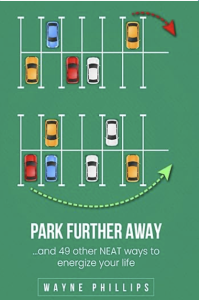
“Park Further Away: … and 49 other NEAT ways to energize your life”
NOTE: If you are interested in
- Obtaining more information on this topic
- Learning how Research could Matter to your business or to your lifestyle
Email Dr. Phillips directly at wphillips@syfound.com – or use our Contact Page